Future Military: Who Calls the Shots?

By Jeremy Clift, author of Born in Space: Unlocking Destiny

War is changing rapidly and military science fiction is finding it hard to keep up.
With artificial intelligence moving into military decision-making, the armies imagined by science fiction no longer seem quite as distant as they once did. Drones allow people to fight from thousands of miles away, private companies build and operate technologies that governments increasingly depend upon, and space itself is becoming an arena of strategic competition.
Yet the most interesting question may not be what weapons future militaries will use, but who will control them and in whose interests they will fight.

Military science fiction was very much in the air at this year's World Science Fiction Convention in Los Angeles in August and who would control future armies was a question that came up repeatedly during a panel called The Red Army: Leftist Military Science Fiction, in which I participated. The title initially suggests a fairly straightforward debate about whether military science fiction can be written from the political left rather than the right. Once we started talking, however, the contradiction became much more interesting.
A military is one of the most collective institutions human beings have created. Its members surrender a considerable degree of individual autonomy, depend upon one another for survival, and work toward objectives that can only be achieved collectively. Militaries can defend populations, resist invasion, and overthrow oppressive regimes.
At the same time, military organizations depend upon hierarchy, discipline, and concentrated authority. Orders flow downward, obedience is expected, and decisions made by a relatively small number of people can determine whether thousands live or die. The same institution that embodies collective action can therefore become an extraordinarily powerful instrument of coercion.
The Sci-Fi Laboratory
That tension seems particularly relevant now. Technology increasingly allows military power to be exercised at greater distance from those who experience its consequences. Autonomous systems may eventually make decisions faster than humans can meaningfully supervise them, while surveillance, artificial intelligence, and vast collections of data give states capabilities that earlier governments could scarcely have imagined. Meanwhile, many of the technologies on which future militaries will depend are being developed not by governments but by corporations.
Science fiction gives us a laboratory in which to push those developments further. What happens when a military no longer needs large numbers of soldiers? What happens when an algorithm helps decide who constitutes a threat, or when a corporation owns the communications network, artificial intelligence or spacecraft on which a government depends? If military power is exercised in the name of the collective, how much control does that collective actually have over it?
Those questions make the familiar argument about whether military science fiction is inherently conservative much less interesting than the deeper problem beneath it. Who controls organized force, who is accountable for its use, and how do we prevent institutions created to protect society from acquiring power over the society they are supposed to protect?
Science fiction has been worrying away at those questions for decades.
Is military science fiction inherently conservative?
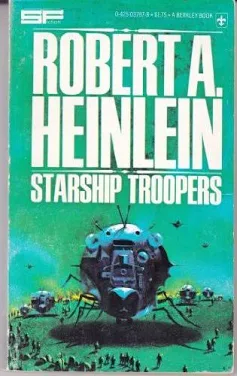
Military science fiction has often been associated with hierarchy, patriotism, technological superiority and clearly defined enemies. Robert Heinlein's Starship Troopers remains perhaps the most famous example, and arguments over its politics have continued since its publication in 1959.
The association is understandable, but the genre is much broader than that description suggests. A novel can contain soldiers, battles and military hardware without endorsing the political system that sends those soldiers to war. Indeed, some of the strongest military science fiction uses the experience of war to question the institutions behind it.
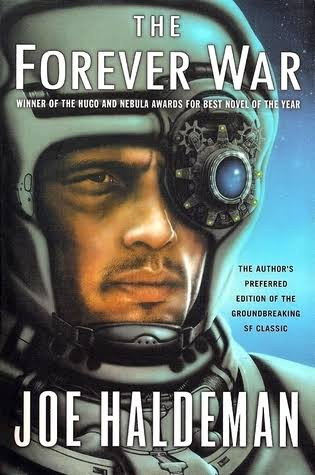
Joe Haldeman's The Forever War is an obvious example. Published in the aftermath of the Vietnam War and informed by Haldeman's own military experience, it depicts soldiers sent across interstellar distances to fight an enemy they barely understand. Relativistic travel means that centuries pass on Earth while the soldiers experience only years, leaving them increasingly estranged from the society supposedly being defended.
The novel contains battles and futuristic weaponry, but its deeper subject is the machinery that perpetuates war and the alienation of the people caught inside it.
That distinction matters. Military science fiction does not have to be either pro-military or anti-military. It can ask what militaries are for, who commands them and what happens to the individuals expected to carry out decisions made far above them.
Iain M. Banks and the problem of a post-scarcity military
Iain M. Banks's Culture novels provide an especially interesting test case.
The Culture is broadly egalitarian and post-scarcity. Artificial intelligences known as Minds perform much of the work required to keep civilization functioning, while ordinary citizens enjoy extraordinary freedom and material abundance. Money has effectively disappeared, and traditional political and economic hierarchies have largely dissolved. Yet the Culture still uses force.
Its interventionist organizations, particularly Contact and Special Circumstances, manipulate other civilizations and sometimes resort to violence when they believe intervention is justified.
That produces a fascinating contradiction. A society may be egalitarian internally while exercising enormous power over outsiders.

The question then becomes less about whether the Culture is left-wing than about accountability. Who decides when intervention is justified? Who decides that one civilization's values should be imposed upon another? If vastly intelligent Minds make those decisions better than humans could, does that make their power more legitimate, or merely harder to challenge?
Banks understood that utopia does not eliminate politics. Even a society that has solved material scarcity still has to decide what it owes to people beyond its borders and when, if ever, superior power gives it the right to intervene. Those questions have obvious parallels with arguments about humanitarian intervention and military power in our own world.
Ursula K. Le Guin and the problem of authority
Ursula K. Le Guin approached similar questions from another direction.
In The Dispossessed, she imagines the anarchist society of Anarres, where formal government, private property and entrenched hierarchy have largely disappeared. The society is founded on cooperation and mutual obligation rather than coercive authority.
Yet Le Guin does not present Anarres as a simple utopia. Informal power structures emerge, social conformity can become oppressive, and institutions created to coordinate collective activity acquire influence of their own.
That insight matters when thinking about military organization. Removing ranks or private ownership does not automatically remove power. Every collective institution must still decide who coordinates action, how disagreements are resolved and what happens when an individual refuses to cooperate.
A future military might call itself democratic, revolutionary, or egalitarian, but the label tells us relatively little. The more revealing questions concern how decisions are made, whether authority can be challenged and what happens to people who dissent.
When resistance becomes an army
Science fiction is filled with resistance movements fighting empires, corporations and authoritarian states. They usually begin as small groups organized around shared opposition to a more powerful enemy. Success creates a problem.
A resistance movement that grows large enough to fight effectively needs logistics, intelligence, communications, command structures, and some way of coordinating thousands of people. The more militarily successful it becomes, the more it begins to acquire the characteristics of the institution it is fighting.
This is not simply a problem for fictional revolutionaries. It is a recurring problem of political history. Movements organized to overthrow concentrated power must decide what to do with the power they acquire when they succeed.
Science fiction can push that dilemma into extreme circumstances. Imagine a workers' fleet rebelling against a corporate space empire. At first, crews elect their commanders and debate major decisions collectively. Then the enemy attacks. Communications are disrupted, decisions must be made in seconds, and a commander orders a ship into danger without time for a vote.
Has the revolution betrayed its principles, or has survival exposed the limits of those principles?
The interesting question is not whether the fleet remains sufficiently left-wing. The interesting question is how much hierarchy collective survival requires, and what prevents temporary emergency powers from becoming permanent ones.
Technology changes who holds power
Modern military technology adds another dimension that earlier military science fiction could only anticipate.
For most of history, military power depended heavily upon large numbers of people. States needed soldiers, sailors, workers and taxpayers. Even authoritarian governments depended upon human beings willing or compelled to operate the machinery of war. Automation may change that relationship.

A military equipped with autonomous aircraft, robotic vehicles, orbital surveillance and AI-assisted targeting could eventually wield enormous force with far fewer people. That might reduce casualties among its own personnel, but it could also weaken one of the constraints historically placed on governments contemplating war.
The political consequences could be profound. If a government can fight without mobilizing large numbers of citizens, does warfare become easier to initiate? If fewer families have members directly exposed to combat, does public scrutiny diminish? If military decisions increasingly depend upon systems too complicated for most citizens to understand, where does meaningful democratic oversight reside?
The same questions apply to corporations. Governments already rely extensively on private companies for satellites, communications, software, artificial intelligence and other critical technologies. A future in which essential military infrastructure is privately owned would blur the distinction between economic and political power even further.
Science fiction often imagines corporations acquiring armies. The more subtle possibility is that governments retain the armies while becoming dependent upon corporations for the systems that allow those armies to function.
What happens when the machine says no?
Artificial intelligence sharpens the accountability problem.
Suppose an AI system identifies a target, calculates that an attack is justified and recommends immediate action. A human commander approves the strike.
If the intelligence was wrong, who is responsible?

The commander might argue that the system had access to information no human could process quickly enough. The programmers might say they merely created the model. The company might point out that the military decided how to deploy it. Political leaders might insist that established procedures were followed.
Responsibility can become dispersed precisely when the concentration of technological power makes accountability most important.
Science fiction has spent decades imagining machines that seize control from humans. The more plausible problem may be less dramatic. Humans could remain formally in control while gradually becoming reluctant to challenge systems whose reasoning they cannot fully understand.
A machine does not need to overthrow us if we decide that its judgment is better than ours.
The enemy matters too
Another question raised by left-wing military science fiction concerns the way enemies are imagined.
Traditional military narratives often work most easily when the opposing side is clearly identifiable and sufficiently threatening to justify violence. Science fiction can make that especially simple by turning the enemy into aliens, machines or an apparently implacable collective.
The danger is obvious. Once the enemy has been made fundamentally unlike us, moral complexity becomes easier to discard. Some of the most interesting science fiction reverses that process. The apparent enemy turns out to have motives, fears, and internal divisions of its own. The conflict may rest on misunderstanding, manipulation or interests that benefit people far removed from the battlefield.
Haldeman used this powerfully in The Forever War. Other writers have repeatedly returned to the same question: what happens when soldiers discover that the enemy they have been trained to fight is not the enemy they were told to expect?
That may be one of military science fiction's most valuable functions. It can place readers inside a conflict and then force them to reconsider the assumptions that made the conflict appear inevitable.
The real question is who controls the force
Our Worldcon panel began with the idea of “leftist military science fiction,” but the discussion left me thinking that political labels are less useful than the questions beneath them.
A military can claim to defend democracy while operating through rigid hierarchy. A revolutionary army can fight for equality while concentrating extraordinary power in its commanders. A post-scarcity civilization can abolish money and class while allowing immensely powerful artificial intelligences to decide when other societies should be manipulated. A resistance movement can overthrow an empire and then discover that governing requires institutions uncomfortably similar to those it opposed.
Technology does not resolve any of these contradictions. In some respects, it makes them sharper.
The future military may be smaller, faster, and more automated than anything we know today. Its soldiers may operate spacecraft, command swarms of autonomous machines, or supervise artificial intelligences capable of making tactical judgments in fractions of a second. Much of the infrastructure behind those forces may belong to private companies rather than governments.
That makes the political question more important, not less.
The most interesting military science fiction therefore does more than imagine new weapons or spectacular battles. It asks who gives the orders, who has the right to refuse them, who benefits from the conflict, and who is accountable when things go wrong.
Perhaps that is also why military science fiction remains so relevant. The technology of warfare keeps changing, but the fundamental problem has not.
Someone still has to decide who controls the power and calls the shots.
— Jeremy Clift, author of Born in Space, Space Vault, and Space Shield. Read Clift’s profile on Kirkus.


Comments