Building a Shield for Earth: Could We Ever Protect Our Planet from the Sun?

by Jeremy Clift, author of Born in Space
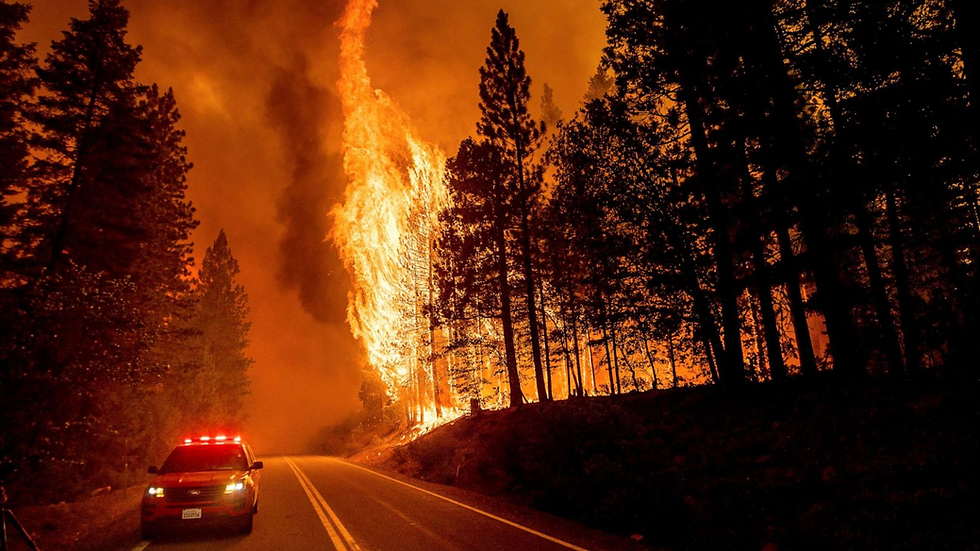
This summer, television screens around the world have been filled with startling images: forests ablaze across southern Europe, vast plumes of smoke drifting across Canada, communities forced to evacuate, and firefighters battling infernos that seem to grow larger and more destructive each year.
Similar scenes have played out in parts of the United States, Australia, and elsewhere, reminding us that modern civilization remains vulnerable to the forces of nature.
Wildfires are complex events, driven by a combination of heat, drought, weather patterns, lightning, vegetation, and human activity. They are not caused by solar storms. Yet they illustrate an important truth: civilizations survive by anticipating natural hazards and building the infrastructure needed to withstand them.
We reinforce buildings against earthquakes, construct levees to manage floods, improve forecasting for hurricanes, and develop early-warning systems for tsunamis. Every generation inherits new challenges and invests in new forms of protection.
As humanity prepares to expand beyond Earth, another question naturally follows.
If we are willing to build cities on the Moon and send people to Mars, what new forms of infrastructure might future generations create to protect civilization itself?
Building Bigger
History suggests that infrastructure evolves alongside society. The Romans built roads that united an empire. Railways and telegraph lines transformed commerce in the nineteenth century. The twentieth century connected continents through electrical grids, aviation, and global communications. Today we depend on GPS satellites, cloud computing, undersea fibre-optic cables, and digital networks so completely that most of us notice them only when they fail.
Each generation inherits systems that would have seemed almost unimaginable to the one before.

The next generation may inherit infrastructure that extends well beyond Earth's atmosphere.
In previous blogs, I've explored how the Moon could become humanity's first industrial world, producing fuel from water ice, manufacturing structures from lunar regolith, and perhaps even hosting large-scale data centres. If that vision becomes reality, we will no longer think of space simply as somewhere we explore. It will become somewhere we live, work, manufacture—and increasingly depend upon.
A Different Kind of Threat
For much of the Space Age, public imagination has focused on asteroids as the great danger from space. The reality may be more complicated.
Our nearest star is an extraordinarily dynamic object. Solar flares and coronal mass ejections regularly hurl enormous clouds of charged particles into the Solar System. Earth's magnetic field protects us from much of their impact, but our technology is considerably more fragile than the planet itself.

A powerful geomagnetic storm could disrupt satellites, interfere with GPS navigation, interrupt communications, damage electrical infrastructure, and ripple through the global economy. Scientists monitor the Sun constantly, and our ability to forecast space weather improves every year. But forecasting is not the same as protection.
Eventually, engineers may begin asking a different question. Not simply, "When will the next major solar storm occur?" But "Could we ever reduce its impact?"
Thinking Like Engineers
Science fiction often imagines a gigantic shield surrounding the Earth.
Engineers usually think differently.
When confronted with an enormous challenge, they rarely build one vast machine. Instead, they divide the problem among many interconnected systems capable of working together. The internet functions because information can take multiple paths. Satellite constellations rely on hundreds or thousands of spacecraft rather than a single platform. Modern electrical grids are designed with redundancy so that local failures do not necessarily cascade into regional collapse.
If humanity ever attempted to build infrastructure capable of mitigating the effects of extreme space weather, it would almost certainly follow the same philosophy. Rather than relying on one colossal structure, it might consist of vast numbers of coordinated components operating together as a resilient, distributed system.
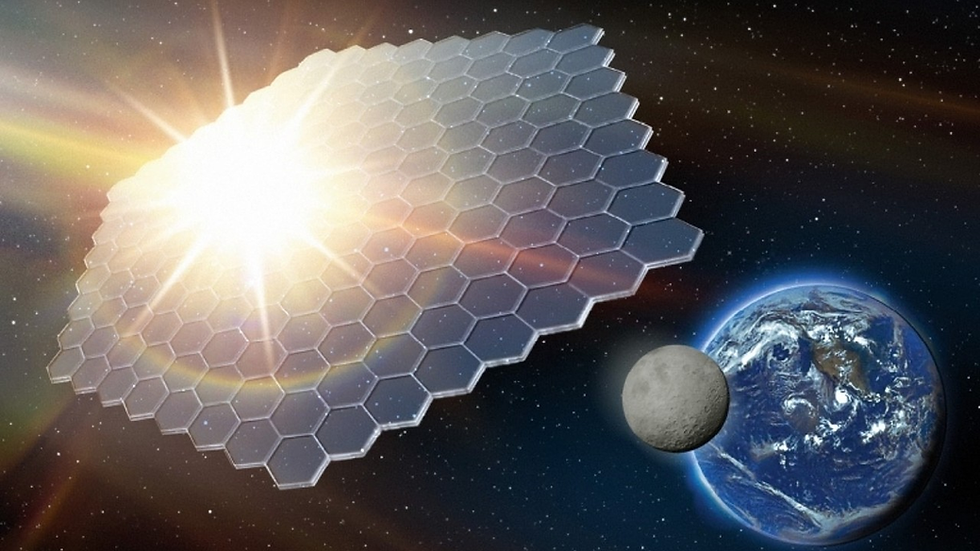
Whether such a project will ever become technically or economically feasible is impossible to say. History, however, has repeatedly shown that ideas once dismissed as science fiction often become engineering problems for the next generation to solve.
Engineering Is Only Half the Story
The greatest challenges would almost certainly lie beyond engineering.
Infrastructure has always shaped power as much as prosperity.
Roads determined trade routes. Railways reshaped economies. Electrical grids became matters of national security. Communications networks transformed politics and commerce. Today, artificial intelligence and cloud computing are driving enormous investment in digital infrastructure because whoever controls the flow of information often influences the future.
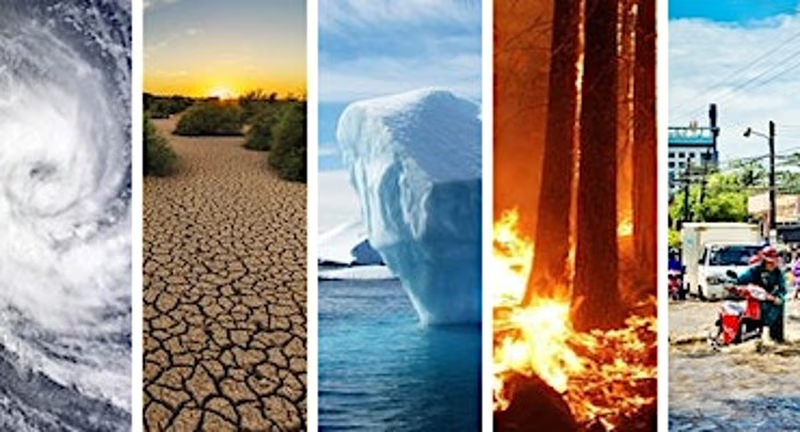
A planetary-scale protection system would raise equally profound questions.
Who would pay for it? Who would govern it? Would every nation have an equal voice? Could a private company own or operate essential planetary infrastructure?
And if a system powerful enough to protect civilization also possessed the ability to influence energy or communications in space, how could humanity ensure that capability was never abused?
These are not purely scientific questions. They are political, economic, ethical, and profoundly human ones.
Imagining the Next Steps

As humanity looks beyond Earth, researchers are already exploring how future civilizations might protect astronauts, satellites, and critical infrastructure from the hazards of space. Concepts ranging from giant magnetic fields positioned between the Earth and the Sun to vast networks of autonomous spacecraft have been proposed as ways of reducing the effects of extreme space weather. Most remain speculative, but they raise an intriguing possibility: one day, protecting Earth itself could become an engineering challenge.
That idea lies at the heart of my new novel, Space Shield. Building on the lunar industry introduced in Born in Space, the novel imagines a future in which humanity has developed the capability to manufacture large-scale infrastructure from lunar resources. Faced with an unprecedented solar threat, scientists and engineers race to deploy a distributed orbital shield designed to absorb, redirect, and dissipate the energy of a catastrophic solar storm before it reaches Earth.
The technology provides the backdrop. The real story is about the people who must decide how such a system should be built, who should control it, and what price humanity is willing to pay for its own survival.
Who would decide whose interests came first when the survival of billions depended on a single interconnected system?
Those are the questions that drive the novel.
Looking Ahead
Every generation builds for the future. The pyramids, Roman aqueducts, suspension bridges, electrical grids, orbital satellites, and global communications networks all began as ambitious ideas that seemed beyond the reach of their time.
Perhaps one day our descendants will look back on the twenty-first century as the moment humanity stopped thinking of Earth as an isolated world and began designing infrastructure on a planetary scale.
Whether that future includes a system capable of protecting our civilization from the Sun remains uncertain.
What seems increasingly certain is that the next great engineering projects may not simply help us explore space. They may help us safeguard everything we have built here on Earth.
— Jeremy Clift, author of Born in Space and Space Vault: The Seed Eclipse. Read Clift’s profile on Kirkus.


Comments